Background
India, through its central bank—the Reserve Bank of India (RBI)—has proposed a major initiative aimed at linking the central bank digital currencies (CBDCs) of BRICS nations (Brazil, Russia, India, China and South Africa). The proposal seeks to facilitate cross-border trade and tourism payments, potentially transforming how member countries settle transactions and cooperate financially.
The suggestion is to put this proposal on the agenda for the 2026 BRICS summit, which India will host later this year. If accepted, it would mark the first formal effort to link BRICS digital currencies at a multilateral level.
Why This Matters: Financial Connectivity and Efficiency
Simplifying Cross-Border Payments
One of the core aims of the proposal is to make cross-border trade and tourism payments smoother and more efficient by enabling direct settlement using linked CBDCs without default reliance on intermediaries or traditional foreign exchange systems like SWIFT.
Reducing Dependence on the U.S. Dollar
While Indian officials have stressed they are not overtly trying to promote de-dollarisation, the proposal comes at a time of rising geopolitical tensions that have prompted many countries to consider alternatives to the dollar-centric global payment system. A linked digital currency network could offer BRICS members a route to settle transactions with less dependence on dollar-denominated channels.
Governments and analysts believe this could have long-term implications for global financial architecture by promoting a multipolar payment ecosystem.
Background: CBDCs and BRICS Cooperation
What Are CBDCs?
Central Bank Digital Currencies are digital forms of a country’s fiat currency, issued and regulated by the respective central bank. Unlike cryptocurrencies, CBDCs are legal tender and backed by state authority.
India’s digital rupee (“e-rupee”) was launched in December 2022 and has gained millions of retail users domestically, highlighting interest in digital currency adoption.
Other BRICS nations are also conducting pilot projects for their CBDCs, though none have fully launched widespread retail versions yet.
BRICS and Financial Interoperability
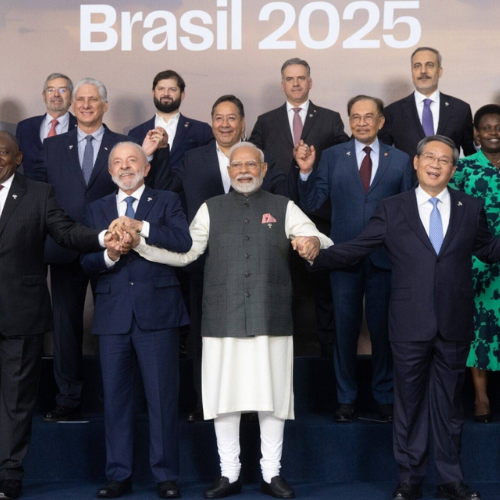
The proposal builds on calls from the 2025 BRICS summit in Rio de Janeiro for greater interoperability among member countries’ payment systems, which aimed to enhance cross-border transactional efficiency.
Opportunities and Challenges
Potential Benefits
Faster settlement of international transactions between BRICS nations.
Lower costs compared with traditional cross-border payment infrastructure.
Potential for enhanced economic cooperation and deeper financial ties within the bloc.
Key Challenges
Interoperability issues: Aligning technological platforms across different countries and central banks.
Governance and regulation: Establishing common rules that respect national laws and financial policies.
Trade imbalances: Mechanisms like bilateral currency swaps may be needed to offset trade differentials among member states.
International Reactions and Geopolitical Implications
Some global observers view the proposal through a geopolitical lens. Moves toward digital currency interoperability among BRICS members could draw scrutiny or pressure from Western nations that see such initiatives as alternatives to existing dollar-centric systems. Notably, former U.S. President Donald Trump has previously criticised BRICS efforts perceived as bypassing the dollar.
At the same time, member countries have diverse economic interests, and reaching consensus on technical and regulatory frameworks will be essential for the proposal’s success.
Looking Ahead: What to Expect at the 2026 BRICS Summit
The 2026 BRICS summit — hosted by India — will be a key testing ground for this initiative. If the plan gains traction, it could shape future financial cooperation within BRICS and influence broader dialogues on global payment systems and economic connectivity.
Conclusion
India’s proposal to link BRICS digital currencies marks a strategic push toward deeper financial connectivity among emerging economies. By leveraging central bank digital currencies to streamline cross-border trade and tourism payments, the initiative aims to reduce costs, improve efficiency, and strengthen intra-BRICS economic ties. While the plan is not explicitly framed as a move away from the U.S. dollar, it reflects a broader search for resilient and diversified payment systems amid global economic uncertainty. Its success, however, will depend on overcoming technical, regulatory, and governance challenges, as well as building consensus among diverse member economies. If advanced at the 2026 BRICS summit, the proposal could become a significant milestone in reshaping how developing nations cooperate in the digital financial era.