Background
In a significant technological breakthrough for India’s defence sector, the Defence Research and Development Organisation (DRDO) has successfully conducted a long-duration ground test of a full-scale scramjet engine, marking a major milestone in the nation’s pursuit of hypersonic missile technology.
The Breakthrough Test
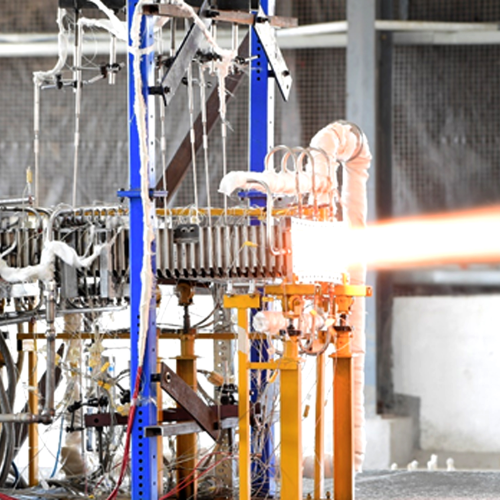
On January 9, 2026, DRDO’s Defence Research & Development Laboratory (DRDL) in Hyderabad achieved a sustained run of over 12 minutes on its actively cooled scramjet combustor at the Scramjet Connect Pipe Test (SCPT) Facility. This represents a key advance in scramjet propulsion—a high-speed air-breathing engine capable of sustaining combustion at hypersonic speeds (above five times the speed of sound).
Scramjet engines differ from traditional rocket engines by using atmospheric oxygen for combustion, greatly increasing range and efficiency for missiles and high-speed platforms. Successfully managing supersonic combustion and extreme heat for over 12 minutes demonstrates the robustness of design, cooling systems, and materials involved.
Strategic Importance
This accomplishment lays foundational groundwork for the development of hypersonic cruise missiles, which can travel at speeds exceeding Mach 5 (over 6,100 km/h). Scramjet propulsion is central to achieving such sustained high-velocity travel within the atmosphere, making missiles harder to intercept and significantly faster in reaching targets compared to conventional systems.
Defence Minister Rajnath Singh hailed the achievement as a “solid foundation” for the **Hypersonic Cruise Missile Development Programme,” emphasizing its importance in India’s efforts to enhance defence capabilities and strategic deterrence.
What This Means for India
Technological Edge: With this long-duration test, India joins a select group of countries mastering scramjet propulsion, a key technology for future high-speed weapons and aerospace systems.
Indigenous Capability: The scramjet and related systems were developed domestically with contributions from Indian industry partners, reinforcing the government’s focus on Atmanirbhar Bharat (self-reliant India) in critical defence technologies.
Next Steps: The focus will now shift toward integrating this engine into a complete missile system and conducting flight tests, aiming at prototype hypersonic cruise missiles such as BrahMos-II and other advanced designs.
How Scramjet Technology Works
A scramjet (Supersonic Combustion Ramjet) operates without rotating components, unlike turbojet or turbofan engines. Instead, air entering the engine at hypersonic speed is compressed purely by the vehicle’s forward motion. Fuel is then injected into this compressed air, and combustion occurs while the airflow remains supersonic.
The major engineering challenge is that at speeds above Mach 5, temperatures exceed 2,000°C, requiring advanced materials, cooling techniques, and precision fuel injection. DRDO’s test successfully demonstrated:
stable supersonic combustion
thermal-management capability
fuel–air mixing efficiency
structural durability during long-duration operation
Global Context
Hypersonic technology has become a frontier in modern military capability, with nations like the United States, Russia, and China investing heavily in development programs. India’s progress in sustained scramjet operation places it alongside these advanced developers and enhances its strategic posture in the Indo-Pacific region.
Conclusion
DRDO’s successful scramjet engine test marks a decisive leap in India’s journey toward operational hypersonic capability. The achievement demonstrates not only technological prowess in supersonic combustion and thermal management but also the country’s growing self-reliance in critical defence technologies. While challenges such as flight integration, guidance, and material endurance remain, the milestone establishes a strong foundation for future hypersonic cruise missiles and advanced aerospace systems. As India advances from ground testing to real-world deployment, this breakthrough strengthens national security, accelerates innovation in space and defence, and positions India among the few nations shaping the next era of high-speed propulsion and strategic deterrence.