What Has Happened?
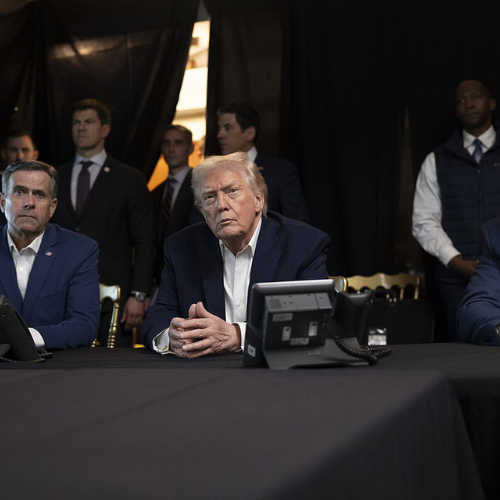
In early January 2026, the United States launched a military operation in Venezuela, capturing President Nicolás Maduro and his wife. U.S. President Donald Trump described the operation as a law‑enforcement action against narco‑trafficking and vowed to “run” Venezuela temporarily as part of a transition plan. This dramatic intervention triggered global debate over sovereignty, international law and geopolitical norms.
Several countries—including China, Russia and Brazil—condemned the U.S. move as a violation of international law at the United Nations Security Council, while others saw implications for energy markets and global power dynamics.
India’s Diplomatic Position: Balancing Act
India’s official reaction has been carefully calibrated:
“Deep concern” was expressed by the Indian government over developments in Venezuela, urging all parties to seek peaceful resolution through dialogue.
New Delhi refrained from explicitly condemning the U.S. action or aligning fully with global criticisms, reflecting its strategic emphasis on non‑interference and diplomacy.
This stance reflects India’s traditional approach of multi‑alignment—not directly joining blocs while maintaining engagement with both Western and Global South partners.
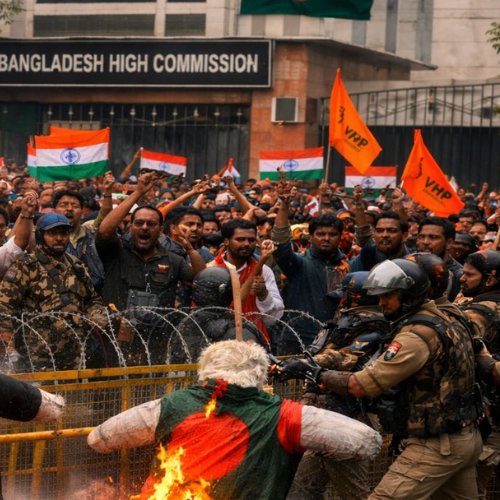
However, some Indian political voices have criticized the government for being oversensitive to the U.S. and too cautious in taking a clear principled stance on international law and sovereignty.
Economic and Energy Implications for India
Trade Exposure Is Minimal
Economic ties between India and Venezuela have shrunk significantly over recent years:
Bilateral trade now constitutes only a tiny fraction of India’s overall commerce.
Under U.S. sanctions, crude imports from Venezuela plunged—down over 80% by FY2025—and now form a negligible part of India’s energy import basket.
As experts note, this dramatically reduced trade exposure means that India faces little direct impact on trade or energy security from the Venezuela conflict.
Oil Market and Prices
Even though Venezuela holds some of the world’s largest crude reserves, its actual production remains low due to under‑investment and sanctions. This means that short‑term global price volatility—such as the temporary price swings seen after the U.S. operation—doesn’t directly translate into sustained oil market disruptions that hit India’s energy import bill.
In fact, analysts suggest any immediate oil price impact will be short‑lived, with resilience in Indian markets.
Strategic and Long‑Term Energy Opportunities
There are longer‑term strategic considerations:
India has historic upstream investments in Venezuela through ONGC Videsh Ltd. in fields like San Cristobal. Under sanctions, these assets were effectively frozen.
If the geopolitical situation evolves with sanctions eased or restructured, India could potentially reclaim unpaid dividends or regain access to energy resources—though risks remain due to infrastructure decay and political instability.
Moreover, access to Venezuela’s heavy crude—if sanctions change—could offer economically attractive feedstock for complex Indian refineries over the long term.
Geopolitical and Strategic Balance
Upholding International Norms
By calling for peaceful dialogue, India reiterates its commitment to sovereignty and the UN charter, without alienating any major global partner.
Relations with the U.S.
India–U.S. relations have deepened across trade, defense and technology. A blunt condemnation of U.S. action might strain cooperation, particularly when India seeks continued support on issues like Indo‑Pacific security and climate technology.
Engagement with the Global South
At the same time, India preserves its credibility among developing nations by urging diplomatic resolution and respect for sovereignty—core tenets of its non‑aligned tradition.
Broader Lessons for India
The Venezuela episode resonates with broader themes relevant to Indian strategic policy:
Fluidity of global power: Great power actions—even distant ones—can reshape international norms and alliances.
Energy security diversification: India’s ongoing energy diversification (from the Middle East, Russia, Africa, and renewables) has insulated it so far from dependence on any single source.
Non‑aligned diplomacy: India’s response reflects its long‑standing effort to balance relations with the U.S., Russia, China and the Global South without outright bloc politics.
Conclusion
While the direct economic impact of the US–Venezuela conflict on India is limited, its geopolitical symbolism is significant. It underscores India’s commitment to diplomacy and peaceful resolution, even as it navigates complex relationships with global powers. New Delhi’s pragmatic response reflects careful balancing between principles and realpolitik, ensuring that its strategic interests—whether in energy security, international law, or global partnerships—are preserved in a rapidly changing world.