Background
For more than a decade, India and Bangladesh enjoyed a close partnership marked by deep economic ties, security cooperation, and political alignment, especially under Bangladesh’s former Prime Minister Sheikh Hasina. India provided substantial economic assistance, energy supplies, and infrastructure connectivity, helping drive bilateral trade to about $13 billion annually.
However, this momentum has weakened significantly since August 2024, when Sheikh Hasina was removed from power following mass protests in Bangladesh and subsequently took refuge in India. Dhaka’s new government has been less aligned with New Delhi’s foreign policy priorities, recalibrating ties with other powers such as China and Pakistan.
Key Causes of the Current Tensions
Political & Diplomatic Friction
Bangladesh’s ouster of Hasina—India’s long-time ally—has become a cornerstone of distrust. Dhaka formally urged India to extradite Hasina for legal proceedings, a request with deep political sensitivity.
India, for its part, has been cautious in how it engages with Bangladesh’s interim leadership, mindful of domestic political narratives in both countries.
Diplomatic Incidents & Security Concerns
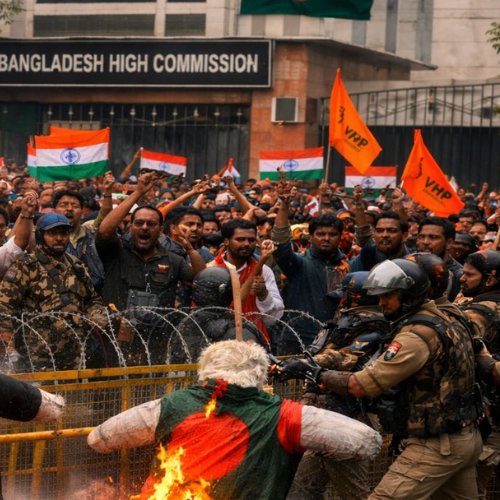
Attacks on diplomatic facilities, like the vandalism of the Bangladesh visa centre in Siliguri and threats near Indian missions, prompted mutual summoning of envoys—a sign of fraying trust.
Security concerns regarding extremist groups and statements by regional leaders have intensified anxieties on both sides.
Economic & Trade Disagreements
India’s tightening of trade regimes—such as restricting access for Bangladeshi exports through key land routes and narrowing ports of entry—has affected Bangladesh’s garment and export sectors.
Meanwhile, Bangladesh’s own trade barriers, including curbs on Indian yarn and other products, have fed reciprocal tensions.
Geopolitical Shifts
Dhaka’s outreach to China and Pakistan in recent months reflects a diversification of strategic partnerships. This pivot is seen in increased Chinese economic engagement and discussions of mutual interests with Pakistan—moves New Delhi interprets as undermining its traditional influence in the region.
Consequences of Tensions
Diplomatic Strain
The mutual recall and summoning of high commissioners mark a low point in diplomatic engagement since the “golden era”. Both capitals are seeking ways to manage the crisis, but trust remains fragile.
Economic Impact
Cross-border economic linkages—once a key strength of the relationship—are under strain. Trade disruptions and visa-service disruptions, like the recent closure of India’s visa application centre in Dhaka for security reasons, complicate people-to-people and commercial ties. Similarly, the drop in Bangladeshi medical tourism to India due to instability reveals how political turmoil can ripple into economic sectors.
Security & Border Issues
Border incidents—ranging from trespassing allegations on both sides to halted infrastructure work—exacerbate suspicions. Reports have surfaced of mutual accusations along the long and sensitive India–Bangladesh border, adding tactical tensions to the strategic rift.
Regional Strategic Balance
Bangladesh’s embrace of alternative partners like China signals a shift in South Asian geopolitics. A more diversified Dhaka foreign policy could challenge India’s desire for a stable and friendly eastern neighbour—a dynamic with potential implications for broader regional alignments.
Prospects for Improvement
Despite the tensions, diplomatic engagement has not collapsed entirely. Recent high-level visits—such as India’s External Affairs Minister S. Jaishankar’s trip to Dhaka—aim to reset the narrative and reaffirm cooperation on shared interests. Such initiatives suggest that both sides still value the relationship and are seeking pathways to de-escalation.
India has also reiterated its respect for Bangladesh’s political system and its desire to rebuild trust, underscored by gestures like Prime Minister Modi’s tribute to Bangladesh’s former leaders.
Conclusion
The India–Bangladesh relationship is at a pivotal juncture. Once defined by a “golden era” of cooperation, it now navigates the complexities of domestic political change, economic competition, and shifting geostrategic ambitions. Managing these tensions without eroding foundational ties will require careful diplomacy, restraint from inflammatory rhetoric, and sustained engagement on mutual concerns such as trade, security, and regional stability.